


















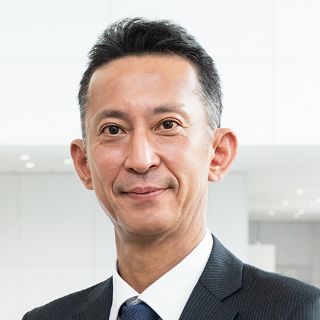

Sharing determination: "Let's make this project a success"
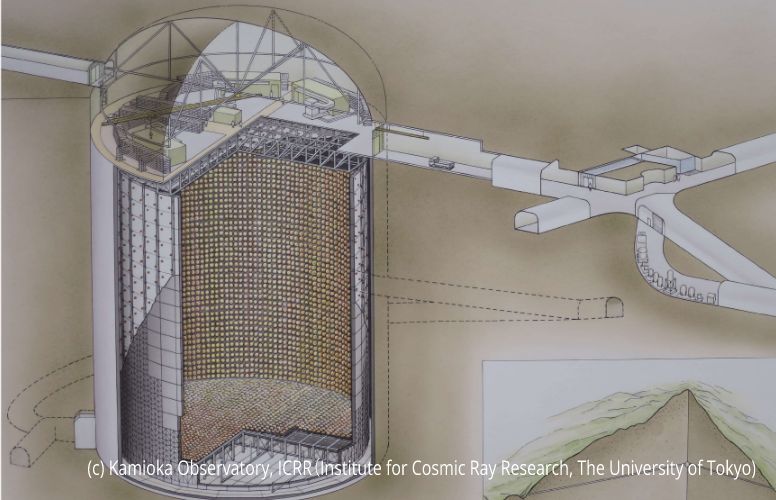
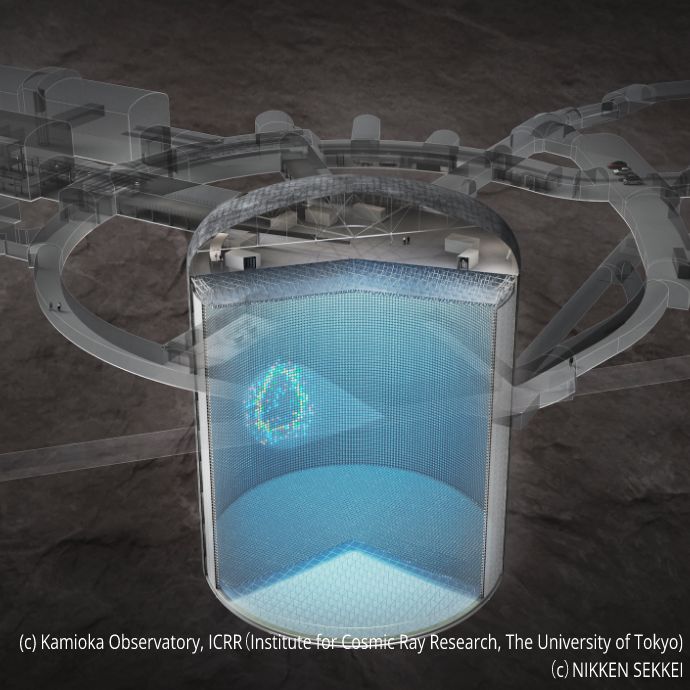
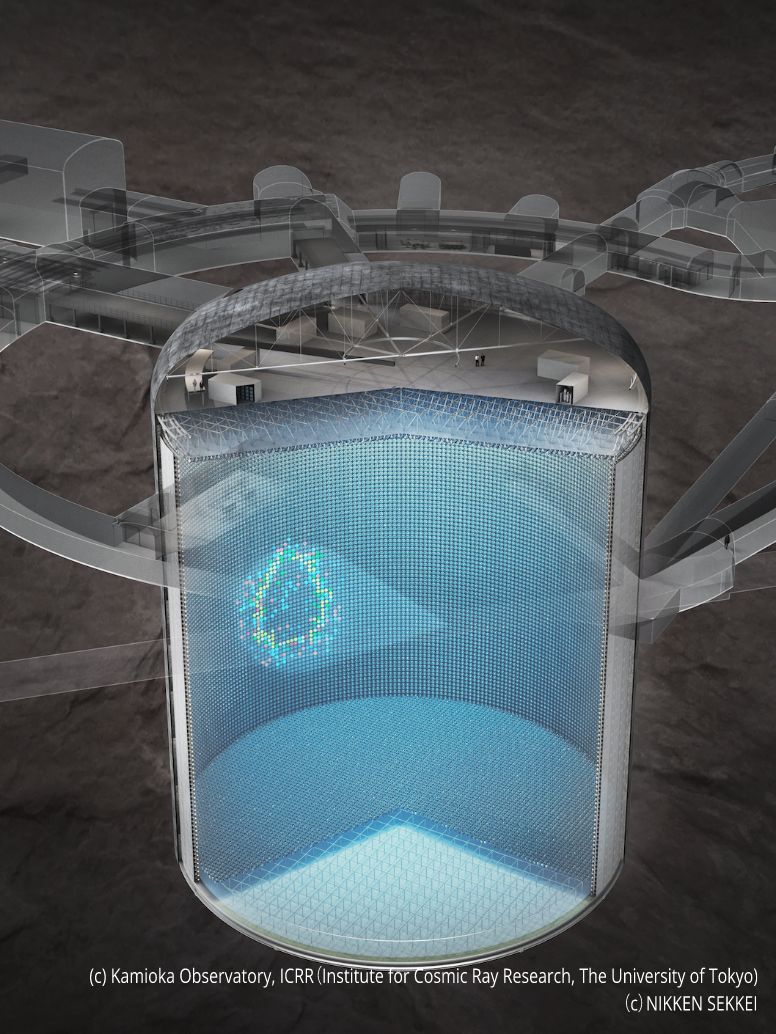
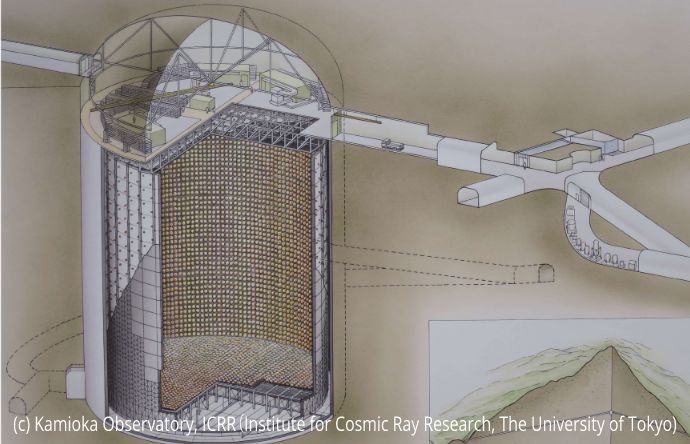
Located in a mine 1,000 m underground, Super-Kamiokande was designed with a bold idea: to observe space from underground. The bedrock blocks unwanted particles (cosmic rays) pouring down from space, while a stainless steel tank, 41.4 m in total height, 39.3 m in diameter, and filled with 50,000 tons of ultrapure water, is used to detect neutrinos.
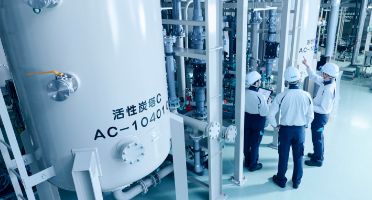
The 50,000 tons of ultrapure water are needed because even slight impurities in water would block the faint Cherenkov light produced when neutrinos interact with the water. Organo's mission was to provide a comprehensive water treatment solution, including producing the most ultrapure water possible, designing equipment used deep underground, optimizing piping routes, and performing sophisticated system management. Chosen for this task of great responsibility was Hiromori Mochizuki, then a new employee.
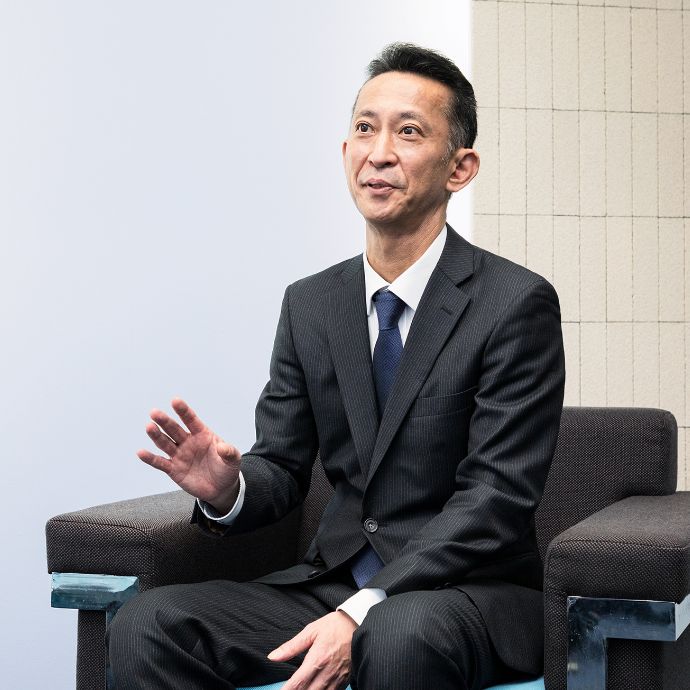
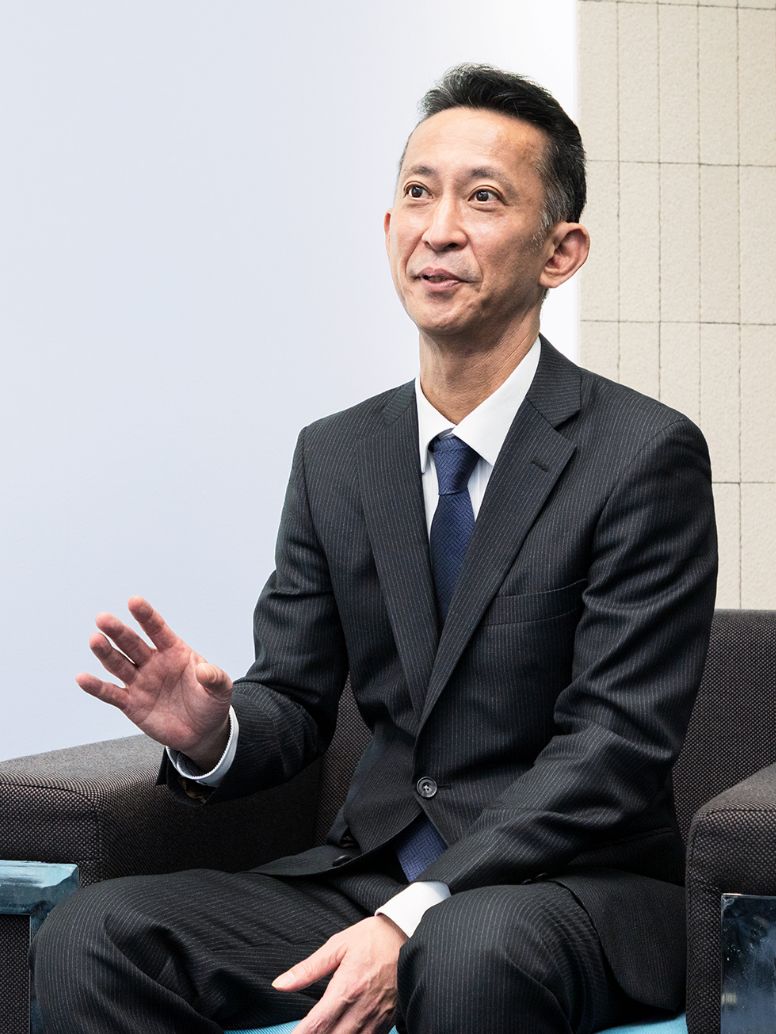
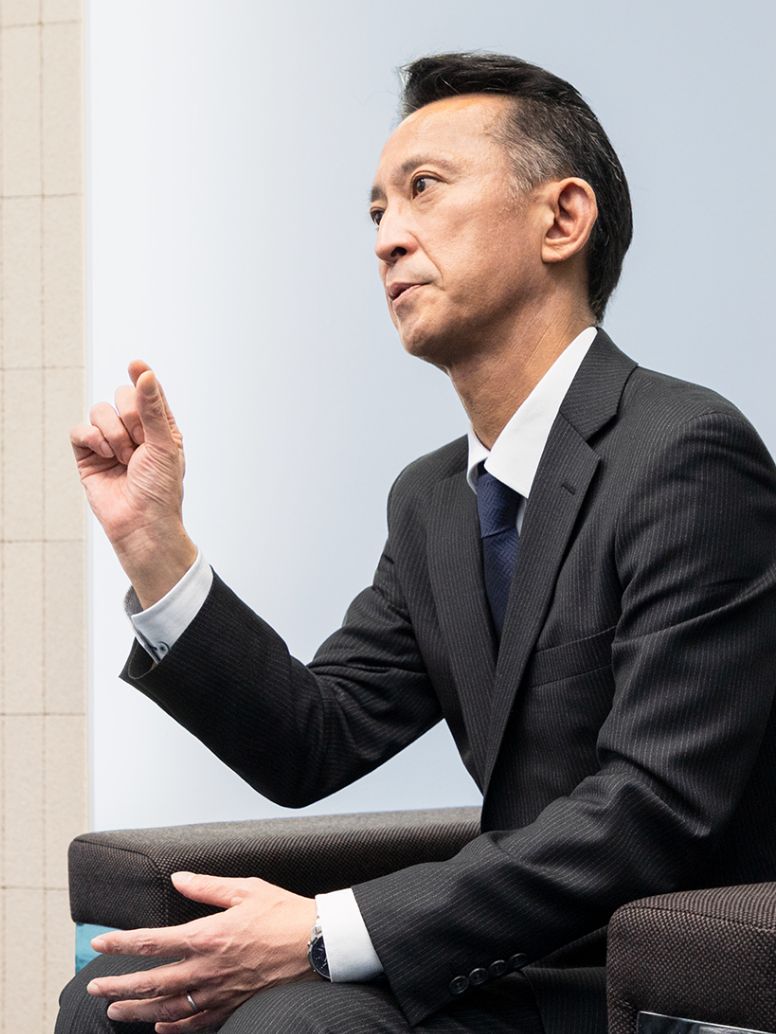
"Organo had supplied ultrapure water for the previous 'Kamiokande' project, and the 'Super-Kamiokande' project was launched with the goal of improving observation accuracy even further," recalls Mochizuki. "I had just joined the company, and I was suddenly assigned this very important sales role. I still vividly remember visiting the laboratory at the University of Tokyo, where papers and documents were stacked high and young Professor Kajita sat at the back of the room. We had many discussions between those stacks of papers."
That "Professor Kajita" was none other than Takaaki Kajita of the University of Tokyo, who would go on to discover neutrino oscillation during the Super-Kamiokande project and ultimately be awarded the Nobel Prize in Physics.
"Professor Kajita is a very kind and gentle man, and he's very passionate about space. He really opens up when talking about it, and he's got a lot to say," Mochizuki continues. "He'll repeatedly break down difficult concepts so that you can understand them, and this really inspired me to do everything I could to help him to unravel the mysteries of the universe. We'd both chant, 'Let's do this, let's make this project a success,' and I think that this shared determination really helped to build momentum."
Unprecedented ultrapure water for a water screen
Removing all impurities from 50,000 tons of water to create the perfect screen. Considering that standard ultrapure water equipment typically handle anywhere from several tons to several hundred tons of water, it is easy to imagine how difficult a challenge it would be to create such a water screen.
This would be a major challenge even for Organo, which has a track record of supplying ultrapure water in many fields. Just how different would this ultrapure water be, in terms of scale and quality?
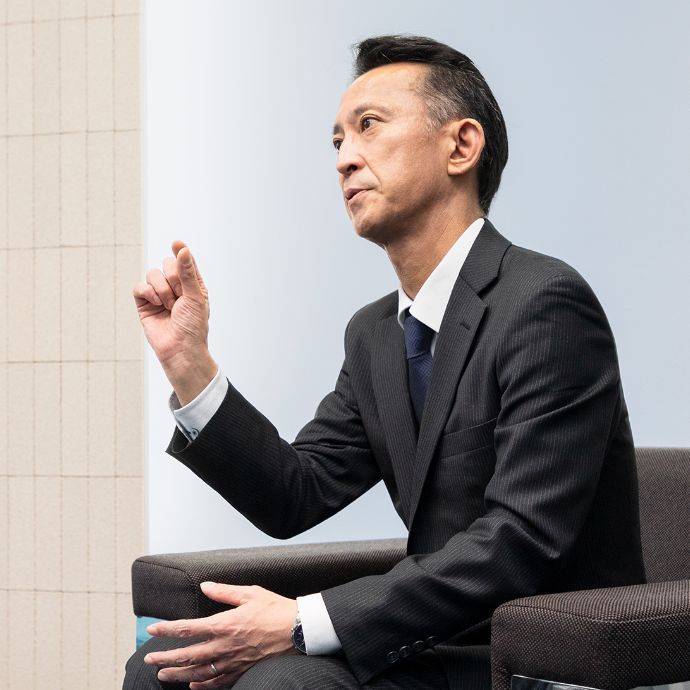
"The water quality standards required for Super-Kamiokande were simply unparalleled at that time," explains Mochizuki. "The greatest challenge was removing radioactive substances. There are many kinds of radioactive substances, such as thorium, floating in the air in a mine. Radon is the greatest threat. It slowly seeps out from the cracks in the bedrock into the tunnels and inside water tanks. If it breaks down in water and releases radiation, it generates unwanted light that can obscure the faint Cherenkov light produced by neutrinos. Another challenge lay in the degassing process used to produce ultrapure water. During this process, unneeded components dissolved in water are removed using air. However, if we use the air inside a mine to do this, all the impurities contained in that air will simply be reintroduced into the water. Accordingly, we can't meet the requirements unless we control not only the water but also the air as well. This requires some truly impressive technology, far beyond what we use for typical projects."
Organo would need to develop an "ultrapure water screen to meet Super-Kamiokande specifications," by reducing impurities, most importantly radioactive substances, but also ion components, organic matter, and fine particles, to within acceptable limits. It seemed an impossible task. Whenever he felt discouraged at the scale of this unprecedented initiative, Mochizuki would press on, with Professor Kajita's words, 'Let's do this, let's make this project a success,' echoing in his mind.