






















Respect for Human RightsRespect for Human Rights
Our Approach
The Organo Group considers it essential to respect the human rights of all stakeholders involved in our corporate activities—across our entire value chain, including Organo itself—and to conduct business with integrity.
Respect for human rights is fundamental to corporate activity. As business operations have spread globally, society's focus on human rights issues has grown. In response to this international trend, the United Nations adopted its Guiding Principles on Business and Human Rights in 2011. The Organo Group has adopted these principles as the framework for respecting human rights in our corporate activities, and we continue to systematically advance our human rights initiatives.
Overview of Corporate Respect for Human Rights
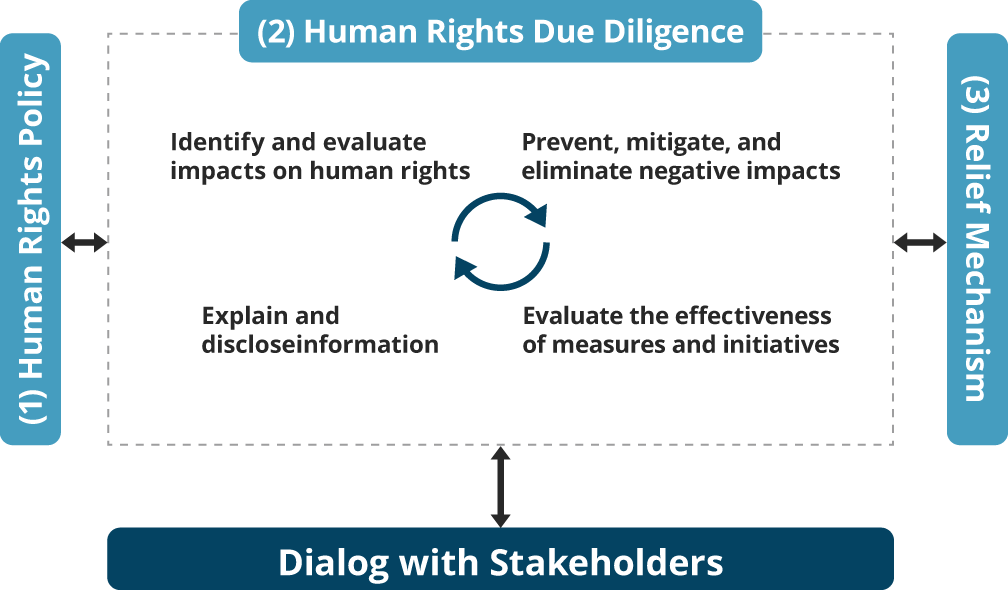

Organo Group Human Rights Policy
Human Rights Policy Establishment Process
In fiscal year 2024, the Organo Group established its human rights policy as the first step in our approach to corporate respect for human rights (shown above). The policy establishment process is described below.
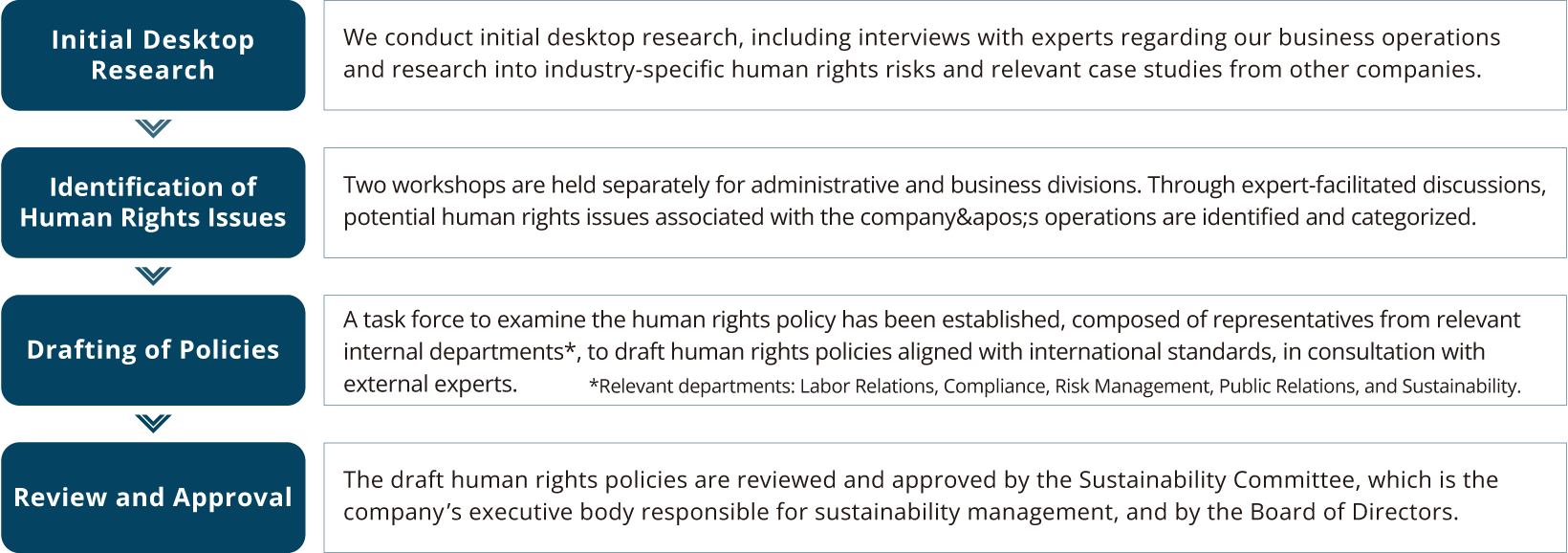
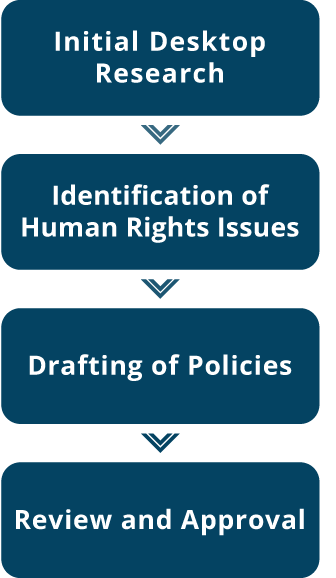
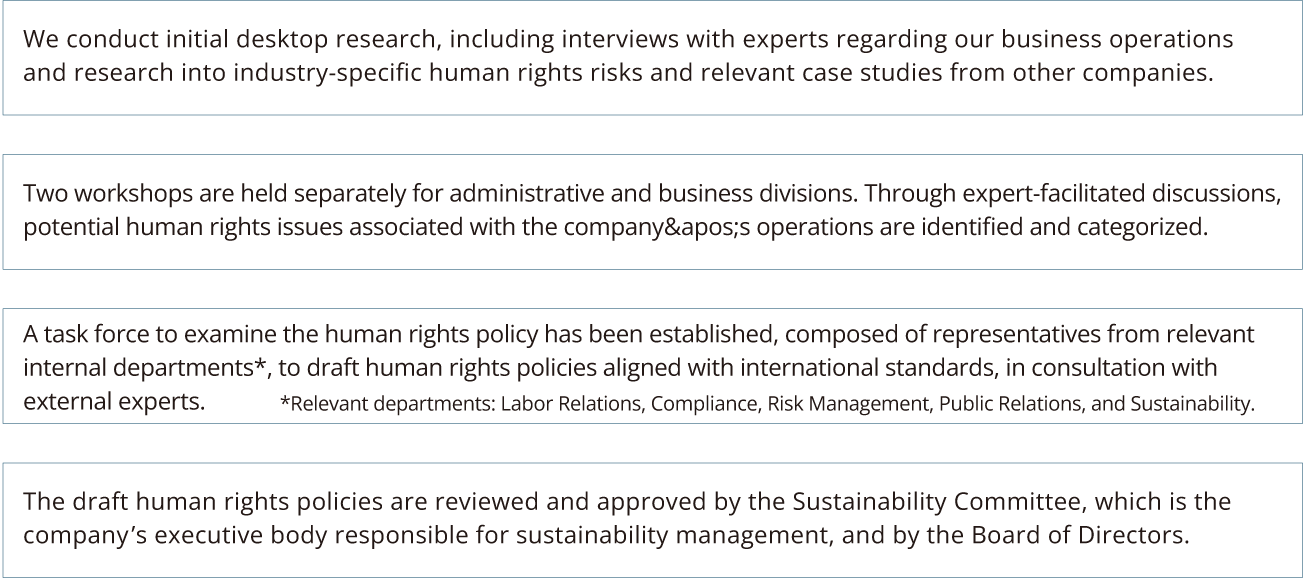
Following this procedure and after deliberation and approval by the Board of Directors, we established the Organo Group Human Rights Policy on March 26, 2025. We will work to communicate this policy and embed it throughout the organization, while building the framework to conduct human rights due diligence as the next step in our approach to corporate respect for human rights.
Human Rights Initiatives
Prohibition of forced labor and child labor
To prevent forced labor, Organo enters into employment contracts with all employees and hires only after working conditions are mutually agreed between the company and the employee. To prevent child labor, we verify each prospective employee's age through official documents to confirm they are at least 18 years old. We only require a copy of the individual's identification—we do not retain originals.
Prohibition of discrimination and harassment
Organo conducts fair, non-discriminatory employment screening throughout our recruitment process. Hiring decisions, including those made through interviews, are based solely on applicants' aptitudes and abilities—not on factors such as birthplace, nationality, race, ethnicity, beliefs, religion, sexual orientation, gender identity, or personal interests. Treatment and opportunities such as promotions, remuneration, and access to training are determined by job grade, and we ensure fair opportunities and treatment for employees within the same grade.
We also provide training on what constitutes harassment, and have established a dedicated channel for consultation, complaints, and reports related to workplace harassment. When a consultation, complaint, or report is received, we investigate in accordance with our internal Rules for Preventing Workplace Harassment. If harassment is confirmed, we take disciplinary action under our Rules of Employment. Strict confidentiality is maintained throughout the process, and we ensure that neither the reporter nor anyone who cooperates in the fact-finding suffers any adverse consequences. Harassment can also be reported through our internal whistleblowing system (described below).
Respect for diversity
The Organo Group believes that bringing diverse perspectives together drives innovation and enhances corporate value. When individuals with different genders, ages, nationalities, career backgrounds, and beliefs come together in an organization, new ideas emerge and creative thinking flourishes. Organo advances various initiatives to create environments where diverse talent can thrive—including promoting women's empowerment, employing people with disabilities, and hiring global and senior talent. For details on our diversity initiatives, see below.
Respect for freedom of association and the right to collective bargaining
Organo recognizes freedom of association and the right to collective bargaining as fundamental human rights that companies must respect. We have adopted a union shop system, and all eligible employees are members of the Organo Labor Union. The company recognizes the Organo Labor Union as its collective bargaining partner and convenes a labor-management council regularly, attended by senior management. At these meetings, senior management presents management policy to union members and listens to their feedback, working to reflect this input in management strategy. The company and union respect one another and work in good faith to resolve issues as they arise, maintaining constructive labor-management relations.
Management of working hours
Organo complies with the Labor Standards Act and all labor-management agreements. Working hours, break periods, overtime, and holidays are defined in our Rules of Employment, and we manage working hours appropriately.
We have also introduced flextime, and provide overtime pay when employees work beyond the prescribed working hours (7 hours and 15 minutes). Individual working hours are tracked through start and end-time recordings. We use a working hours management system to identify discrepancies between recorded start and end times and the actual times when employees log on and off their PCs, ensuring accurate working hours management for each individual.
Employees are entitled to up to 26 days of annual paid leave, which can be taken in half-day increments—and we proactively work to create environments where paid leave is easy to take. We have also identified reducing long working hours as a material issue, and continue to advance measures to reduce overtime—including organizational reforms to restructure work processes and the use of DX to streamline operations.
Trends in the Number of Employees Exceeding 600 Hours of Non-Statutory Working Hours Per Year (Organo only)
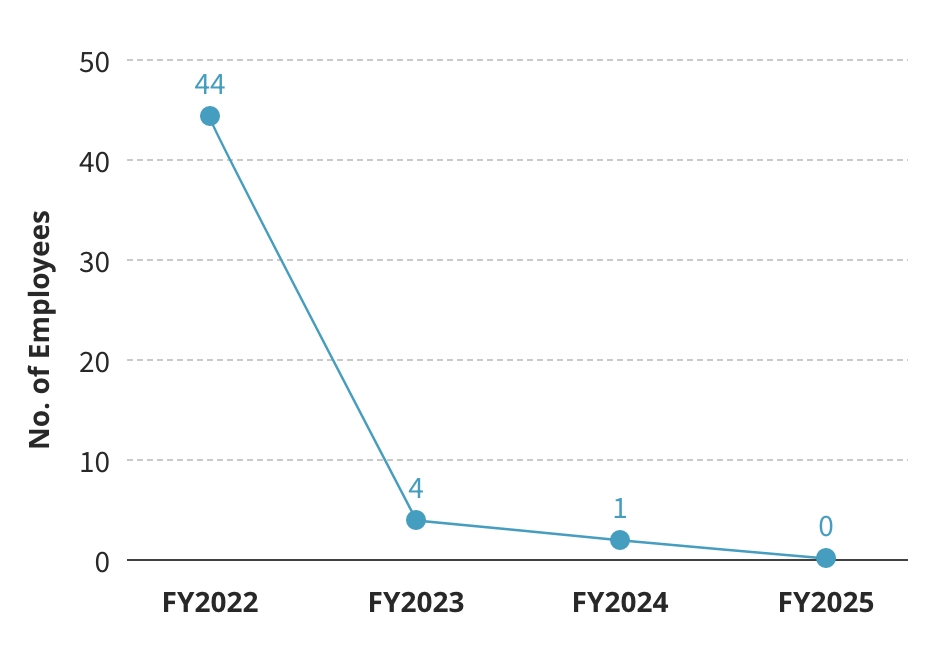
* To view the number of employees at Organo and its group companies in Japan who exceeded 600 hours of non-statutory working hours, click here.
Occupational health and safety
Much of Organo's work is performed on site where workplace incidents are a serious risk. Safety takes priority above all else. We have identified promoting occupational health and safety as a material issue and work to create safe workplaces. For details on our occupational health and safety initiatives, see below.
Protection of personal information
Organo has established its Privacy Policy and Specific Personal Information Policy in accordance with personal information protection laws. We have built the systems required to handle and protect personal information within the company, and we manage and protect personal information appropriately.
Internal whistleblowing system
Organo has established an internal whistleblowing system to quickly identify and address harassment, legal violations, misconduct, or potential issues. In addition to our internal contact point, we have established channels with our Audit and Supervisory Board Members and with external legal counsel to receive reports and consultation requests. When using the Audit and Supervisory Board Members or external legal counsel channels, individuals can request that their name not be shared with the company.
For the system to be effective, employees must be aware of it. We proactively raise awareness of the internal whistleblowing system through methods such as posters in company facilities, articles in company newsletters, and information on our company intranet—encouraging proactive use of the system.
Training on Human Rights and Harassment
Creating workplaces where human rights are respected requires every individual to understand the importance of human rights and to treat one another with respect. Organo conducts training on human rights and harassment to raise employee awareness.
FY2025 Human Rights and Harassment Training (Organo only)
| Training details | Training participants | Enrollment rate | |
|---|---|---|---|
| General human rights | Global perspective on human rights; international standards; business and human rights; the need for corporate initiatives to address human rights, etc. | All employees | 100% |
| Harassment | Sexual harassment | New employees* | 100% |
| Power harassment (basics) | New employees* | 100% | |
| General human rights |
|---|
| Harassment |
| Global perspective on human rights; international standards; business and human rights; the need for corporate initiatives to address human rights, etc. | All employees | 100% |
| Sexual harassment | New employees* | 100% |
| Abuse of authority (basics) | New employees* | 100% |
* New graduate and mid-career hires


Related Links