












Project  Stories

Rapidus IIM Project
Supporting a new era in Japan's
semiconductor industry
with the power to circulate water.
Project start

Providing total water management for a next-generation semiconductor manufacturing facility taking on the challenge as a national project

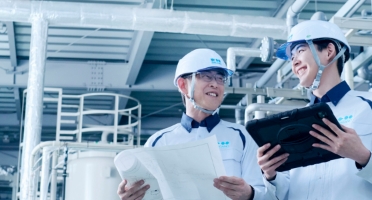
Japan's semiconductor industry is making a comeback at the global forefront. Carrying the weight of these expectations is IIM*1, Rapidus' next-generation semiconductor manufacturing location, which began operating in Chitose, Hokkaido Prefecture. In this state-of-the-art facility, which has aspects of a national project, the company is taking on the challenge of manufacturing ultra-fine logic semiconductors called the 2 nm (nanometer)*2 generation of semiconductors. During this impressive project, in which Japan's technological capabilities and the future of manufacturing are being put on the line, Organo is responsible for building the water treatment system that would serve as the foundation for semiconductor manufacturing quality. Water management, which is used for everything from the stable supply of ultrapure water for use in manufacturing processes to water recovery and wastewater treatment, can be considered a true necessity for advanced semiconductor manufacturing. What this requires is not simply extending conventional technologies and operations, but implementing highly accurate and flexible technologies and operations suitable for supporting advanced processes. It was when Rapidus' vision met with Organo's accumulated knowledge and creativity that the two companies began collaborating on seeking a solution. This is the story of how the water professionals at Organo took on an unprecedented challenge and successfully brought it to fruition in northern Japan.

*1: Innovative Integration for Manufacturing *2: An advanced ultra-fine processing technology developed to increase performance and decrease the power consumption of semiconductors

Project member
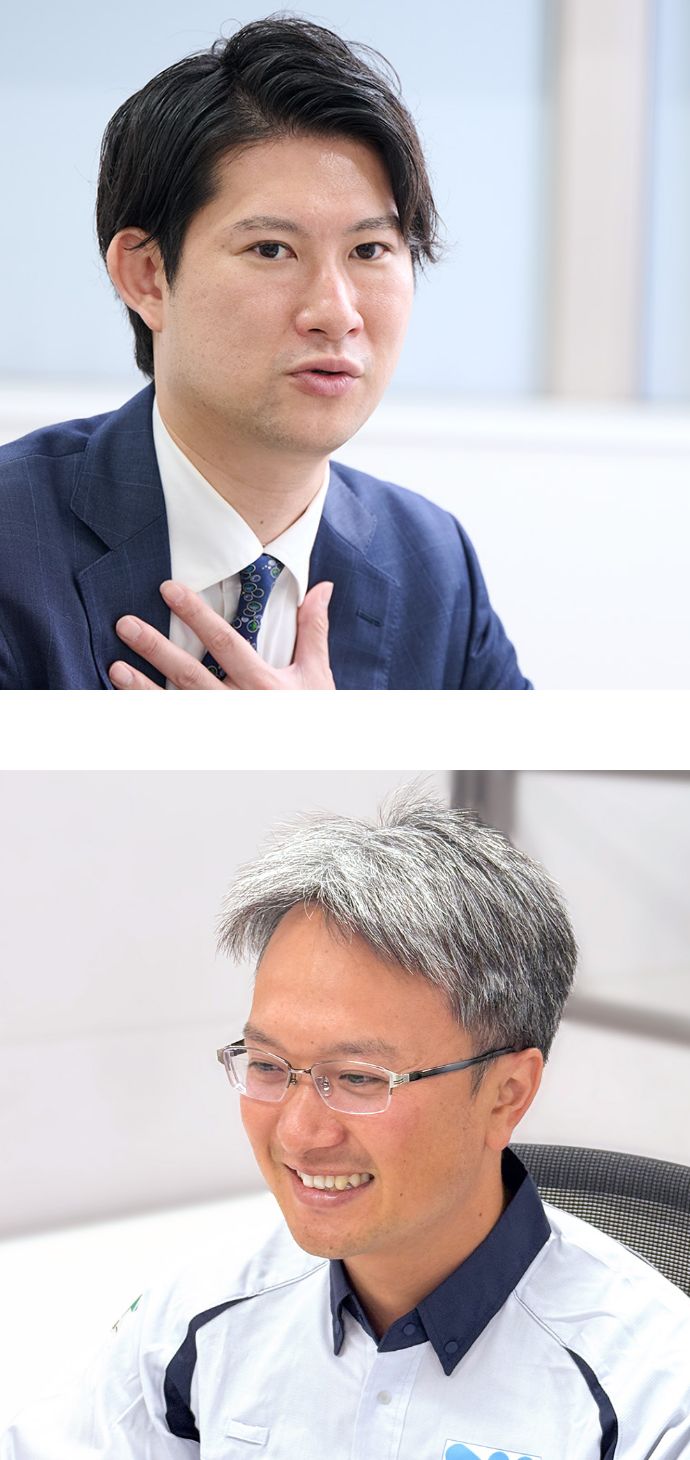
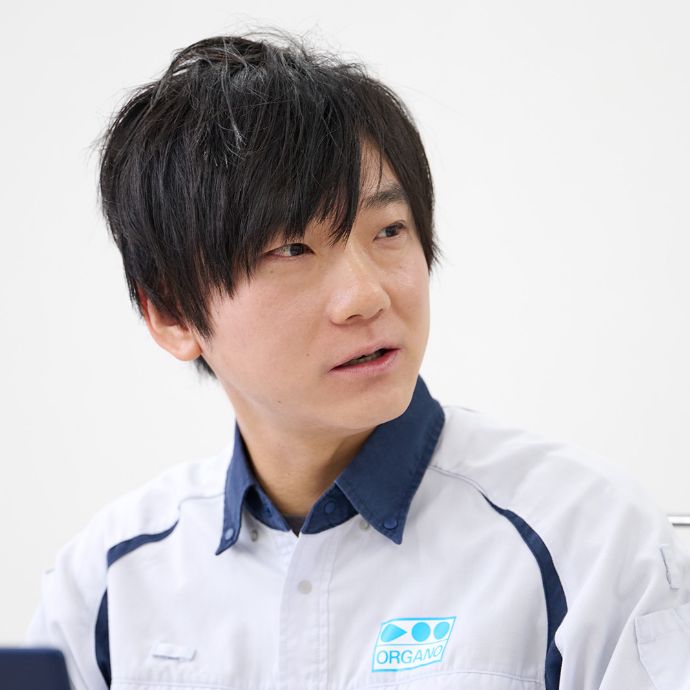
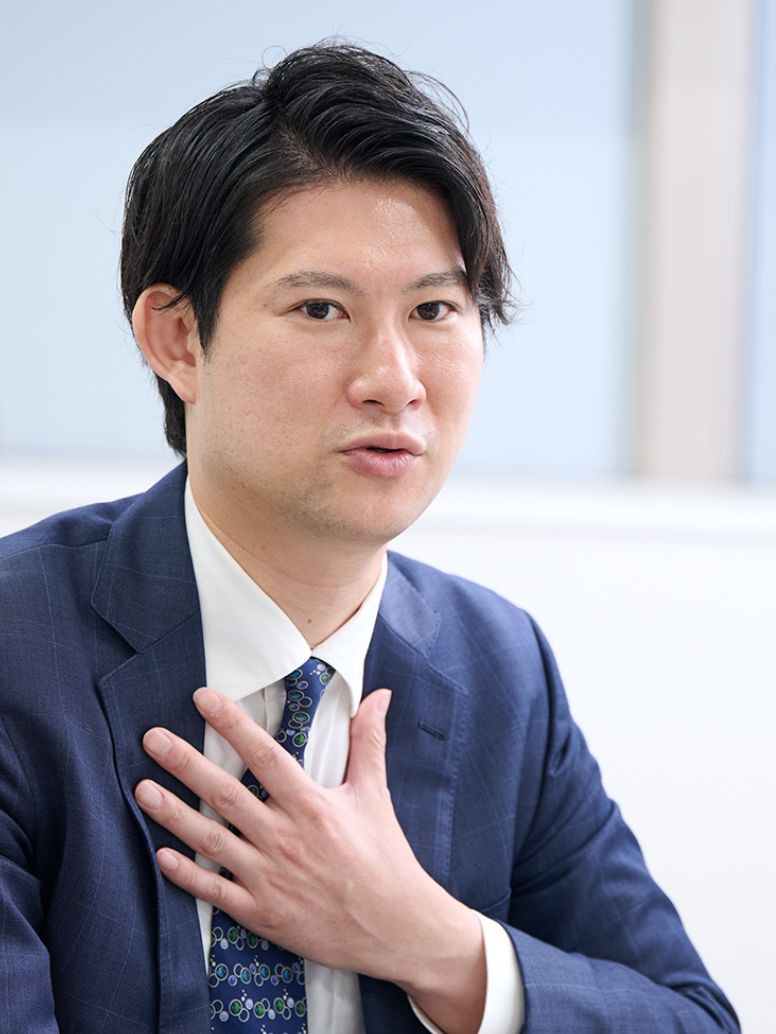
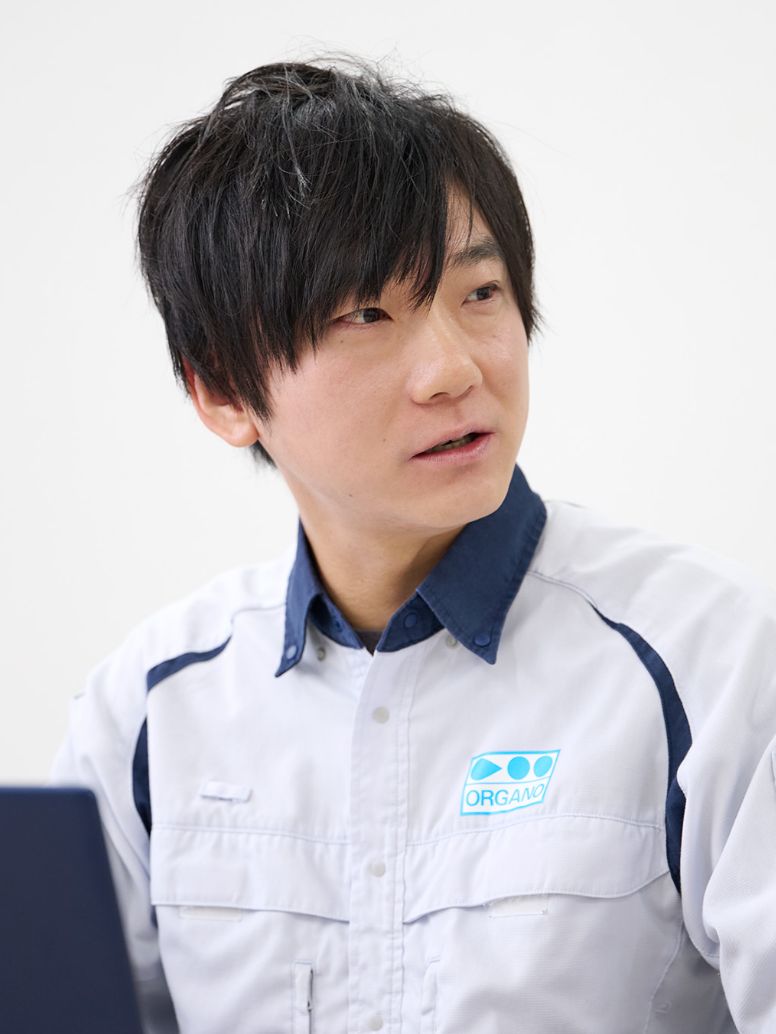
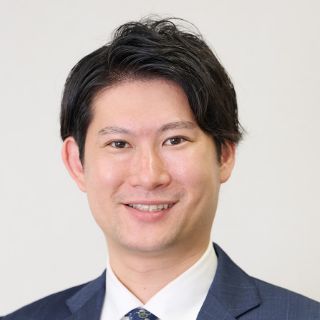
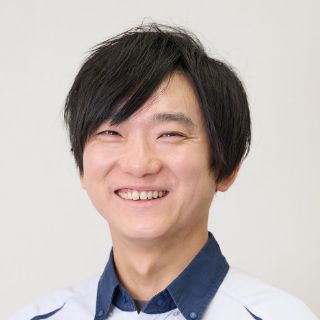
  • A photo of Y.H.

    Y.H.

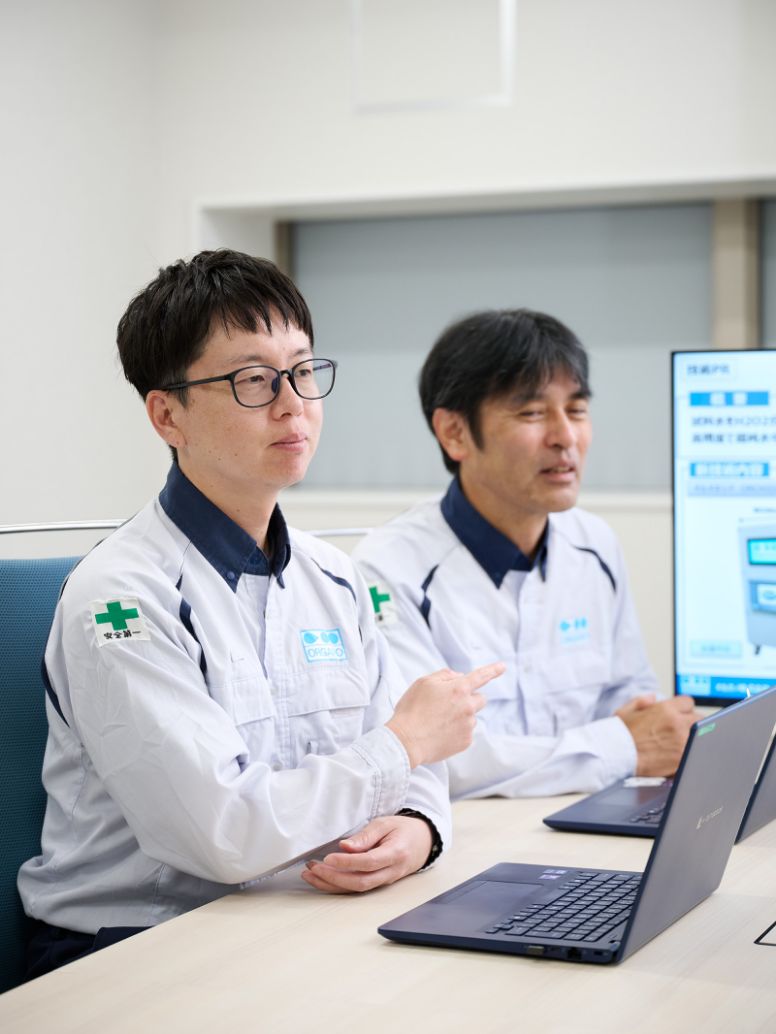
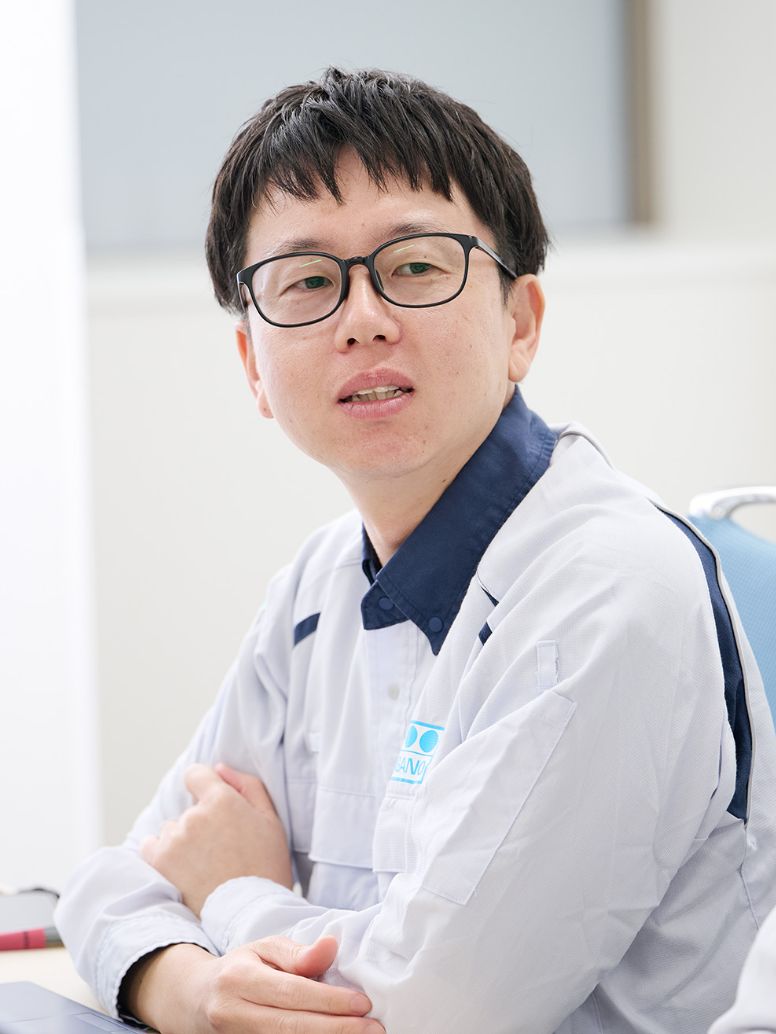
    Y.H. has been responsible for sales since joining the project in 2024. In addition to serving as a point of contact for the customer, general contractors, and subcontractors, he is also responsible for duties such as budget management, contract schemes, and contract negotiations.

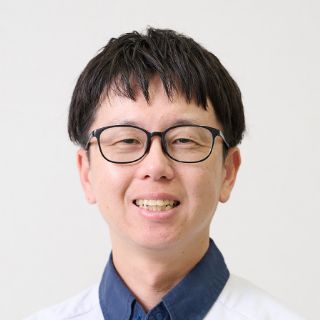
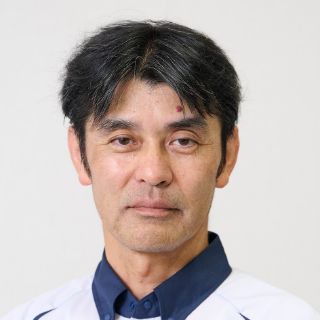
  • A photo of S.O.

    S.O.

    S.O. has served as project manager since joining the project in 2023. He is responsible for budget, schedule, and quality control; determining policy with the customer and response headquarters; and internal and external coordination and management.

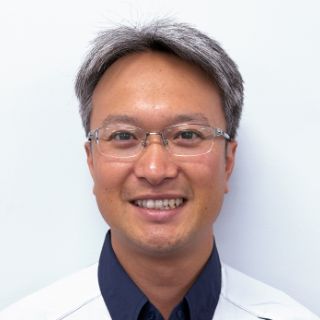
  • A photo of S.Y.

    S.Y.

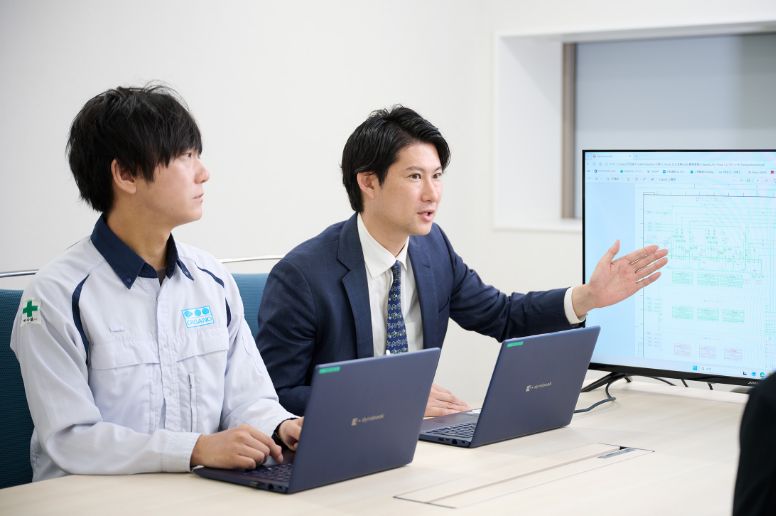
    S.Y. has served as project sub-manager since joining the project in 2023. As a point of contact for the customer, he takes a leading role in conducting technical negotiations and reaching decisions on various issues. He is also responsible for presenting plant designs to the customer.

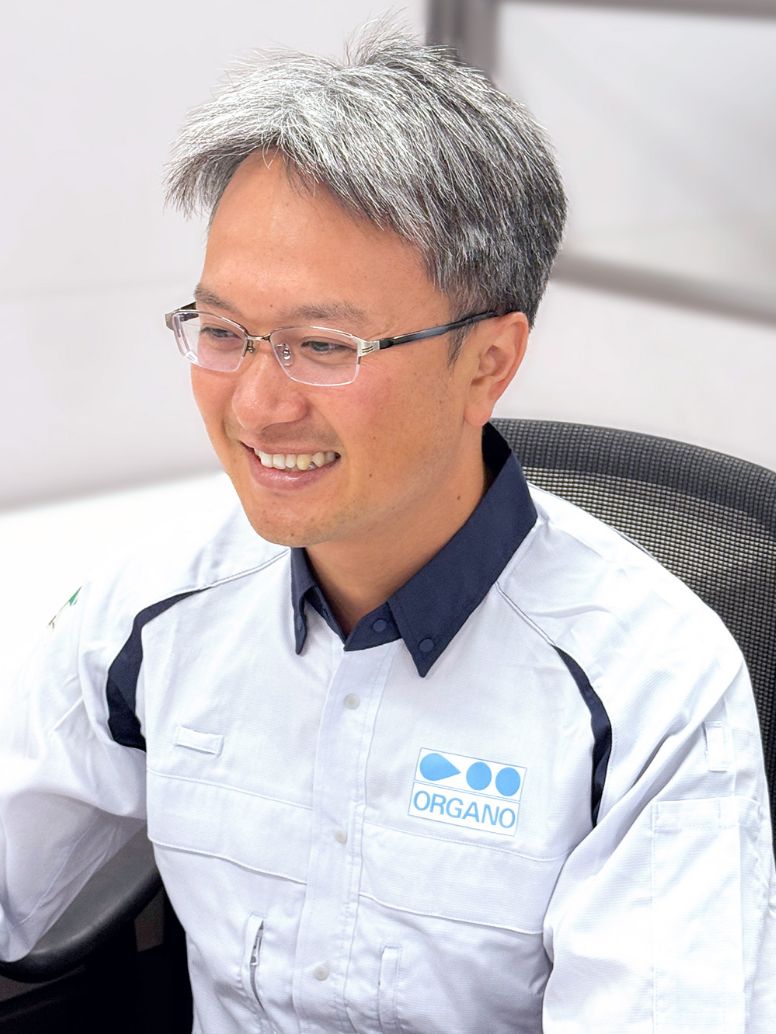
  • A photo of T.M.

    T.M.

    T.M. has been a member of the project since 2024. He was assigned as head of Chitose Office in 2026. In his role as operation, management, and maintenance supervisor for all delivered equipment, he works with partner companies in managing the site and is responsible for reporting to the customer and coordinating agreements.

  • A photo of T.I.

    T.I.

    T.I. has served as site representative since joining the project in 2024. Representing Organo at the construction site, he is responsible for coordinating with the customer, vendors, and partner companies, and is responsible for site management and operations.

Focus 1

The Endless Pursuit of Ensuring
a Stable Supply of Ultrapure Water

Ultrapure water with world-class specifications

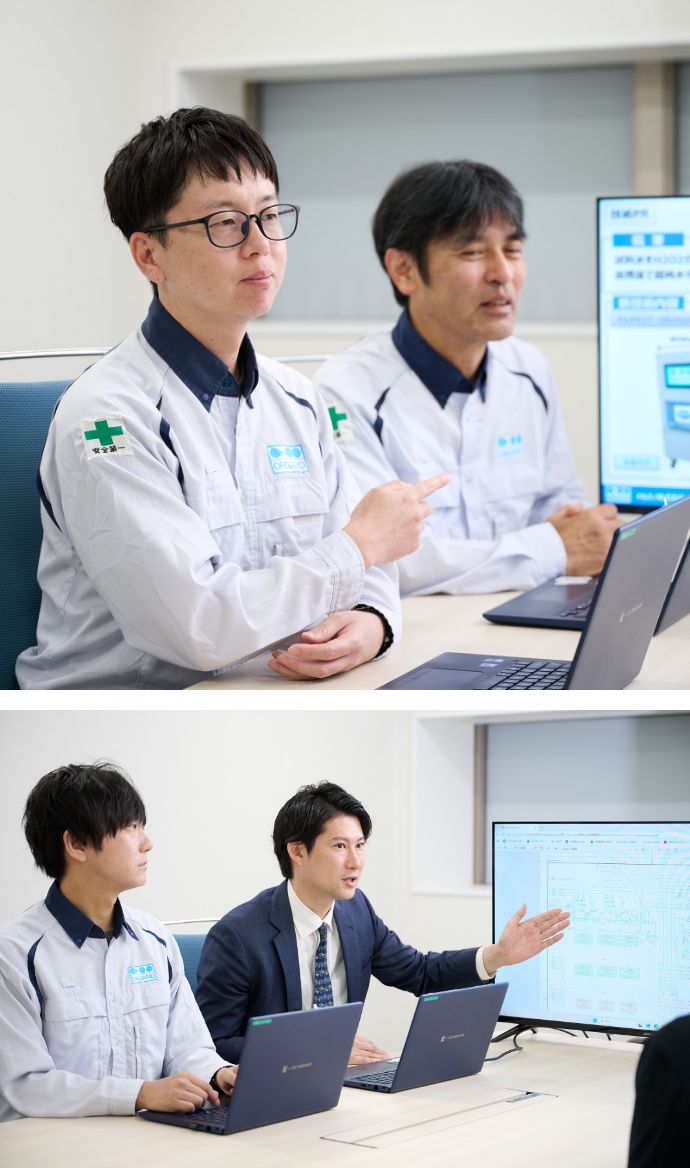
"What they most expected of us was a stable supply of ultrapure water and stable operation," explains Y.H. (sales) in discussing what Rapidus asked of Organo. Ultrapure water plays a crucial role in semiconductor manufacturing, including for cleaning wafers. It is used to remove chemical solutions and contaminants and is the last liquid to come into contact with wafers during the cleaning process, so it must never become contaminated with impurities. "Any foreign material at all could cause operational defects, and the level of cleanliness required would be equivalent to keeping a baseball dome stadium completely clean of dust. Continuing to supply ultrapure water with the highest level of cleanliness for 24 hours a day without stopping is certainly not an easy task," stresses Y.H. The water quality required of the project was also far beyond what had been required for past projects. Rapidus required the highest possible specifications, going even beyond the 2 nm level. According to project sub-manager S.Y., "It wasn't enough to provide advanced service in a single area, such as removing impurities like particles, ions, metals, and organic matter. We needed to deliver world-class specifications in every area." It was during a period of trial and error that the team had a breakthrough in the form of Organo's R & D Center. According to project manager S.O., "We held many discussions with members of the development team who had been working relentlessly on the purification of ultrapure water, and developed a system to use the technologies we were researching in actual plants." His words show both the difficulty of the project and the strong determination of the team to overcome it.
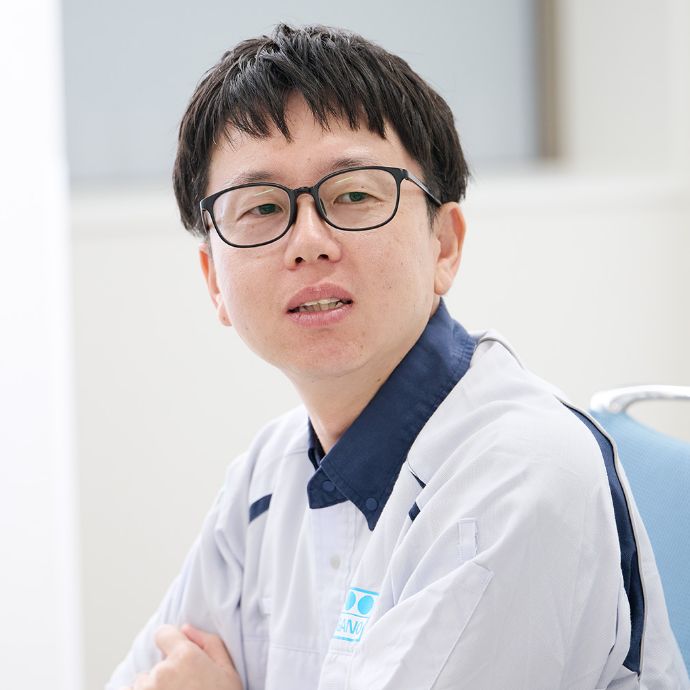
A "water treatment service agreement" (Facility-owned Service) to support the stable supply of water

In addition to the highest possible water quality, the team needed to ensure a stable supply of ultrapure water. Organo made use of a water treatment service agreement (Facility-owned Service) in order to manage the quality of water and ensure a stable supply. Y.H. explains how this works. "Under a water treatment service agreement, Organo owns the equipment and is responsible for the operation and management of the equipment, its maintenance, and responding to unexpected problems. Our job doesn't end once the equipment has been delivered, and it's our mission to provide the customer with peace of mind through a system that allows us to continue to monitor operations as water treatment professionals." This method differs significantly from the standard service model, in which the customer manages the equipment supplied by Organo, and Organo provides support through maintenance and remote monitoring. In addition to reducing the initial investment in equipment, this method allows use of the equipment at a flat annual fee. Another benefit for Rapidus is that this allows personnel to focus on the company's core business of manufacturing. Organo bears overall responsibility for supplying the water for this next-generation semiconductor manufacturing location in Japan.
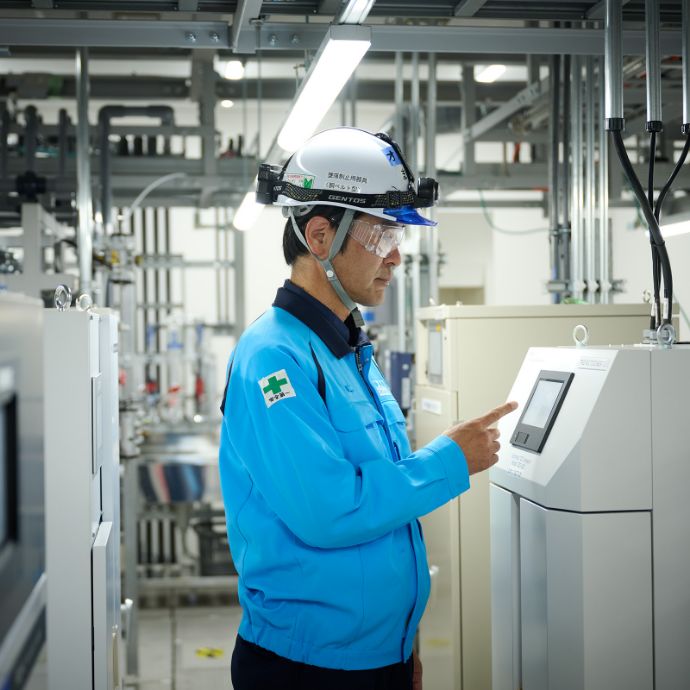
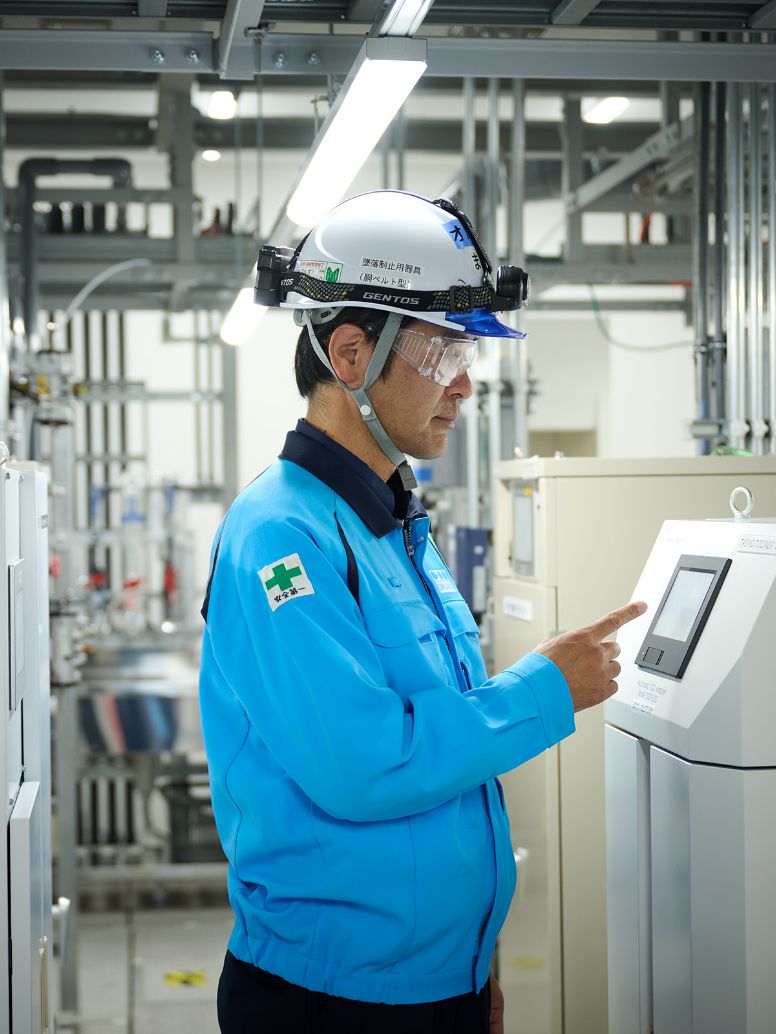
Dedicated personnel on site are responsible for operation and management 24 hours a day, 365 days a year

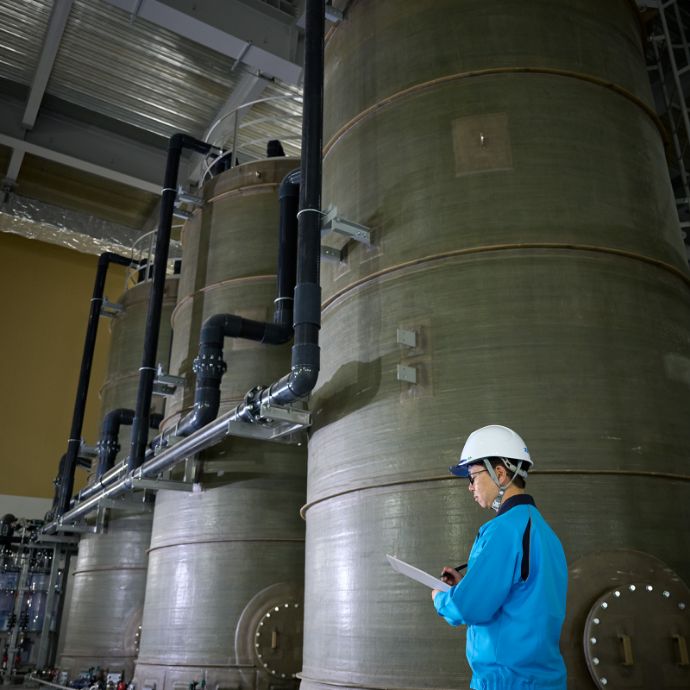
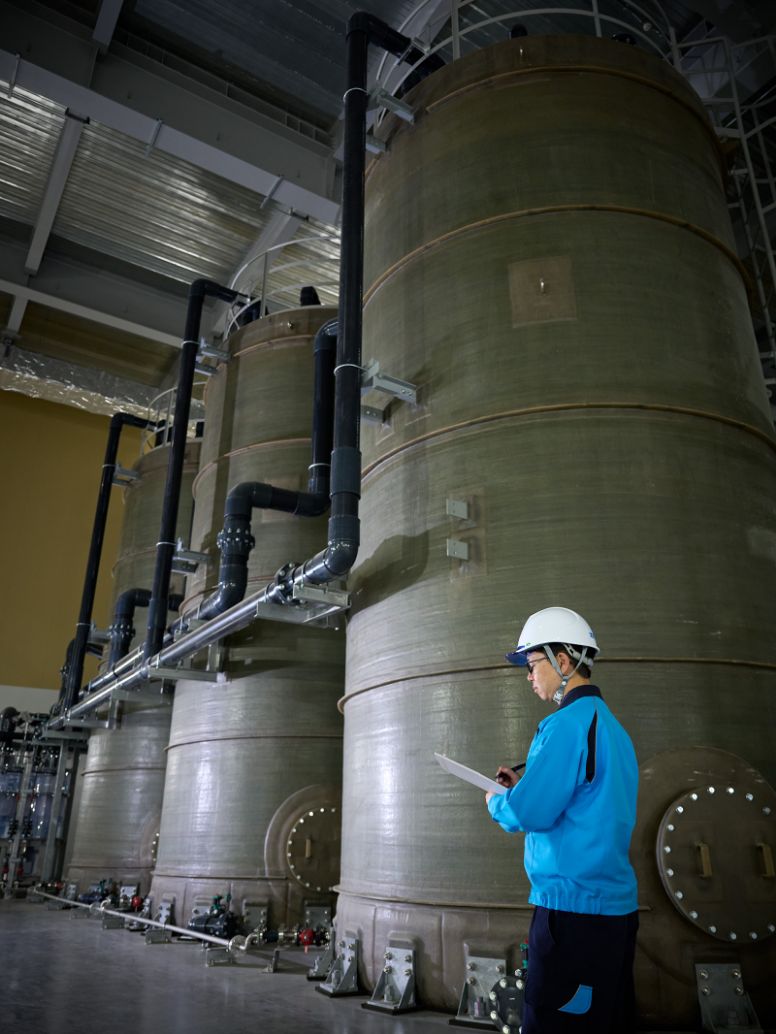
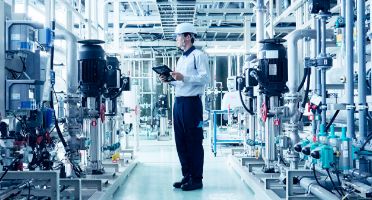
It is not only the equipment that supports the stable supply of ultrapure water and the stable operation of the water treatment system. The key to ensuring a stable supply is an operation and management system in which dedicated personnel on site catch even the most minor variations every day. T.M., the head of Chitose Office, describes what the work entails. "We use a shift system in which personnel, mostly Organo employees, are responsible for operation and management 24 hours a day, 365 days a year. Personnel patrol the site twice a day to gather operation data and check for any abnormalities, such as sounds or water leakage. The monitors in the management office allow us to check the operational status of equipment, the flow rate and pressure of water, and whether there are any alarms. If anything out of the ordinary happens, we figure out why it happened and how to fix it." Organo has an online operation system that makes use of remote monitoring. So why is it necessary to have dedicated personnel on site? T.M. provides a clear answer. "It's because we need to be able to respond immediately. The water treatment system at IIM is extremely important, and we need to respond quickly to any abnormalities that occur. Any delay cannot be tolerated, even at night or on holidays. That's why we have people on site instead of using remote monitoring." T.M. explains that operation and management require "getting the fundamentals right, every time." Personnel are required to avoid becoming complacent, remain aware of early signs of trouble, and always report to and remain in communication with the customer. Maintaining dedicated personnel on site 24 hours a day and 365 days a year has allowed Organo to build trust over time and is the type of initiative that requires a human touch.
Focus 2

Working Together to Find Solutions
to New Challenges

The challenge of an unprecedented pace

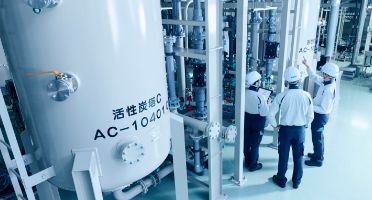
Y.H. explains that the greatest hurdle for the Rapidus IIM project was "the sense of urgency." "Normally, we'd proceed with supplying pure water or ultrapure water once the water treatment building was completed and the equipment was installed, but Rapidus wanted us to begin supplying water as quickly as possible. I think they really wanted to begin prototyping as soon as possible, because they believed that it was their mission to be the first to provide advanced semiconductor products to the world. We were responsible for supplying water, so in order to support them, we decided to temporarily install water treatment equipment inside the semiconductor manufacturing facility." The job required flexible construction capabilities and an accelerated construction schedule. Accelerating the construction schedule required reorganizing the initial schedule and changing how work was done on site. T.I., the site representative on the project, felt this sense of urgency directly at the construction site. "What we focused most on was how to meet the customer's milestones. In order to stay on schedule, we had to keep building even in the freezing winter of Hokkaido. We went in fully prepared, including securing logistics and material storage areas even before we started construction. In order to install the water treatment equipment in the manufacturing building, we also needed to deal with vibration, which is a major issue for semiconductor manufacturing. We also had to coordinate with all of the general contractors, and maintaining control of construction was extremely difficult." S.O. worked tirelessly to coordinate the project internally, in order to meet the urgent needs of the customer. He faced many challenges, including regulations on long working hours and labor shortages. "I didn't want to say something couldn't be done just because of regulations on long working hours. I negotiated with upper management so that we could add some temporary personnel, and we worked to streamline our processes. But that's not to say that it was enough to just prioritize the project's tight schedule. It was my job as project manager to find an overall solution while closely assessing technology, processes, personnel, and the needs of the customer. Sometimes, we needed to meet several times with the customer until we could reach a realistic compromise." This unprecedented sense of urgency does not mean simply charging ahead with passion alone. It was a challenge supported by the team's ability to respond on site, coordinate internally, and engage in dialogue with the customer in order to make the vision a reality.

Recycling water as a water resource instead of simply using it up

Besides the unprecedented sense of urgency, how to handle water resources was another important challenge. Although a massive amount of ultrapure water is essential for semiconductor manufacturing, it is also essential to consider how to deal with limited water resources. In consideration of future expansion to the scale of production, water would need to be recovered and reused at a scale Organo had never handled, while also incorporating eco-friendly and recycling principles. "In order to produce ultrapure water, we draw water from natural water sources," S.Y. explains. "However, this raw water is limited in supply. This is why we needed to build a system to recover and reuse the water used in the factory. We installed wastewater treatment and recovery equipment that separates wastewater according to its quality and volume and reuses it as raw water for ultrapure water, and equipment to reuse water for cooling towers and abatement systems. This allowed us to reduce the amount of intake water." Instead of simply treating and then discharging wastewater, they would determine what water could be used and return it to where it was needed. It was a job of such a large scale that it could not be handled with Organo's technologies and equipment alone. In order to increase the water circulation rate, it is crucial to link these with the manufacturing processes that actually use the water. "We've been meeting with Rapidus and the semiconductor manufacturing equipment manufacturer for discussions and have begun looking into it," Y.H. explains. "We're moving forward with an initiative to identify water that can be reused whenever possible, treat it with our recycling technology, and then return it where it's needed." The core of this initiative is circulating as much of the water used as possible within the factory. The goal is to continue to reuse water as a resource instead of simply using it up, so as to limit the impact of the site on Hokkaido's rich natural environment. This aligns with Rapidus' vision and is helping to lay a solid foundation for next-generation semiconductor manufacturing.

Focus 3

Trust in Organo as a Whole,
Built on the Sincere Efforts
of Each Individual

A team of young professionals driving the project forward

One unique aspect of the Rapidus IIM project is how young the members of the project are. While other companies involved in the project were staffed with experienced executives and department managers with authority to make decisions, Organo's younger employees took the lead on-site and drove the work forward. All of the members on the team describe the situation the same way: "It was challenging." This team of young people needed to make quick decisions to make up for the lack of experience, on-site coordination skills, and above all else, pride as water professionals. T.I. describes his feelings at the time. "I wondered how I should act and conduct myself as a representative of Organo to move the project forward. I closely watched how the key people from each company acted during meetings, including the tone they used and even their eye movements, and incorporated that in changing my approach. We were surrounded by experienced people responsible for a national project, and I was always thinking about how our team of young professionals could play a role in making the project a success." This was the approach adopted by everyone on the team. Their youth was not a weakness. By keeping up with the speed of the project, building relationships with others, and moving the project forward on-site, the team demonstrated its members could make a significant contribution.

Individual thoughts on the project

More than half of the water treatment equipment for the Rapidus IIM project is now operational and providing a stable supply of water. With the project now entering the actual operation and management phase, we asked each member of the team for their thoughts on the project and what they feel they have accomplished.

A photo of Y.H.

Y.H.

I was assigned to the project to replace a senior colleague who'd become ill, so I was feeling a lot of anxiety and pressure at first. I have a lot of respect for that colleague, and was motivated by the fact that I didn't want to ruin any of the relationships that he worked so hard to build. As a young employee in sales, I wanted to prove that the company made the right decision in assigning me to the project. I began making more frequent trips from Tokyo to Chitose to meet with the customer, and I have continued to do so ever since.

A photo of S.O.

S.O.

Rapidus' desire to restore Japan’s competitiveness in the global semiconductor industry was a major source of motivation for me, too. As project manager, I moved the project forward one step at a time while exchanging opinions and working closely with the customer, our partner companies, and other Organo employees. The sense of accomplishment I gained from this project has become a valuable asset to me, and I hope to make use of this experience in my next project.

A photo of S.Y.

S.Y.

The greatest challenge for me was building the specifications from scratch together with the customer, since there were no existing specifications we could use. I felt a great sense of accomplishment at each critical juncture, such as starting the pure water equipment, meeting the required specifications for ultrapure water, and beginning to accept wastewater for treatment. The process of negotiating while striking a balance between our desire to meet the customer's needs and the careful deliberations taking place internally was a uniquely rewarding aspect of this project.

A photo of T.M.

T.M.

My approach is to tackle the project with the determination to apply the trial operation experience I've gained since joining the company to my work at Rapidus IIM in operation and management. There are high expectations from both inside and outside the company, and I continue to think about what we can do to ensure a stable supply of water and bring peace of mind to the customer. The project has just begun. I hope to build on this experience as we prepare for the next phases and establish systems for the stable operation of the water treatment system, wastewater treatment, and maintenance.

A photo of T.I.

T.I.

I have approached this project with a sense of confidence in the fact that I keep the site in mind more than anyone. The work I do every day is what ultimately gave me confidence. The same was true for the other members of the team at the site. Throughout the project, I think we were able to show what our young team could really do. Pushing forward with a sense of dedication is just the way things are done at Organo, whether the project is large or small.

The Rapidus IIM project continues to evolve, from IIM1 to IIM2 and beyond. For as long as the challenge of supporting the future of Japan's semiconductor industry continues, Organo will be there on site as a "water partner." With this mission in mind, Organo will continue its journey together with Rapidus.

Project overview

■ Facility

:

Rapidus IIM next-generation semiconductor manufacturing location

■ Period

:

From 2023 (ongoing)

■ Equipment supplied

:

Ultrapure water production equipment, wastewater treatment equipment, and water recovery equipment